Jacksonville Has Changed, But People Are Still Moving Here
Jacksonville Has Changed, But People Are Still Moving Here
All right, fam, we need to talk about Jacksonville, Florida, because if you spend five minutes online, you would think the whole state is falling apart. Florida is too expensive. People are leaving. Nobody wants to relocate. Jacksonville is not what it used to be.
But here is what I see every day helping families relocate to Northeast Florida: consultations keep getting booked, phones keep ringing, and people keep coming here to tour homes and communities. So the story is clearly more complicated than a headline.
Jacksonville has changed. Florida has changed. Homes, insurance, and everyday costs are higher than they were five years ago. But higher costs do not automatically mean growth stopped. The real question is whether Jacksonville slowed down, or whether the frenzy slowed down while real growth continued.
My take is simple: Jacksonville did not stop growing. It grew up.
A More Normal Jacksonville Housing Market Is Not a Dead Market
From 2020 through 2022, Jacksonville experienced a market that was anything but normal. Buyers were making offers at lightning speed, waiving inspections, competing against multiple offers, and purchasing homes from across the country without ever stepping inside them. It was wild out here in these streets.
That pace was never built to last forever. So when someone says Jacksonville is slowing down, the first response should be: compared to what?
Compared with one of the most intense real estate markets we have ever seen, today's market will obviously feel slower. But slower does not mean dead. It means normal.
Today, buyers have something they did not have much of during the frenzy: options. There is more inventory to consider, more room to negotiate, and more ability to compare builders, communities, locations, and home styles before making a decision.
- Buyers can make thoughtful decisions instead of rushing into the first available house.
- Sellers have to be more realistic about pricing and condition.
- Builders are again offering incentives that many buyers had not seen since before the pandemic.
- The overall market is more balanced, which is healthier for everybody.
That does not mean Northeast Florida lost momentum. It means the chaos cooled off.
Why People Are Still Moving to Jacksonville and Northeast Florida
Opportunity is still a major reason people are moving here. The Jacksonville metro added more than 90,000 residents between 2020 and 2024, making it one of Florida's fastest-growing metro areas. The growth is not limited to one pocket of town either. It is happening across Northeast Florida.
St. Johns County remains one of the fastest-growing counties in Florida. Nassau County continues to add residential development. Clay County keeps drawing buyers who want more space and value. Jacksonville's Northside is changing rapidly through new homes, healthcare, logistics, retail, and industrial investment.
Affordability is rElative
Now, before anybody jumps in and says Jacksonville is not affordable, I hear you. Prices have gone up. But affordability depends on where you are coming from.
Someone selling a 1,500-square-foot home in New Jersey for around $700,000 may find that a larger, newer home in a Jacksonville community with amenities makes a whole lot more sense. The math starts mathing.
I have worked with buyers coming from California who compared a $1.2 million Northeast Florida home with a similar home where they were leaving, priced around $3.6 million. In that situation, Jacksonville does not just feel affordable. It feels like a major value play.
A more diversified job base
Jacksonville is not depending on a single industry to carry the region. Healthcare, financial services, military, logistics, distribution, and port-related work all support the area.
- Healthcare: Mayo Clinic, Baptist Health, and other healthcare employers continue expanding across the region.
- Financial Services: Jacksonville remains a major center for financial employment.
- Military: NAS Jacksonville and Mayport support thousands of jobs.
- JAXPORT: The port recently surpassed 1.4 million containers annually and continues to receive major investment for expansion and infrastructure.
That kind of mix creates what many relocating buyers are looking for: stability.
New construction and lifestyle
While some major metro areas are running out of buildable land, Northeast Florida is still creating new communities. Thousands of new homes have gone up throughout the region in recent years, giving buyers more choices across different price points and lifestyles.
And lifestyle is where Jacksonville really wins for a lot of people. Folks are often not moving here because they are simply running from somewhere else. They are moving toward more space, a different pace of life, beach access, better weather, community amenities, and more balance.
Jacksonville Looks Different Depending on Where You Are Coming From
Here is where this conversation gets real. The Jacksonville that excites a newcomer can be the exact Jacksonville that frustrates a longtime local. And honestly, both sides have a point.
Someone arriving from New York, New Jersey, California, Chicago, Washington, or South Florida may see larger homes, newer communities, beaches, and a better quality of life for the money. A person who has lived here for 20 or 30 years remembers when homes cost less, when I-95, I-295, and County Road 210 were not part of the daily traffic conversation, and when development was not showing up in every direction.
Newcomers see opportunity. Longtime residents see change.
Newcomers see higher home values. Locals see higher home prices.
Newcomers see growth. Locals see construction.
Neither perspective is wrong. They are simply measuring Jacksonville against different versions of the city. Today, the Jacksonville metro has well over 1.7 million residents, and growth is already here.
It is also important to understand that Jacksonville is not one single experience. Jacksonville Beach feels different from Mandarin. Mandarin feels different from Nocatee. Nocatee feels different from Yulee. Yulee feels different from Green Cove Springs. Green Cove Springs is not going to give you the same vibe as Riverside.
It is like several different cities all wearing the same name tag. That is why a move here has to be about finding the right version of Jacksonville for your lifestyle, not just picking a ZIP code because it is on a map.
Where Jacksonville Growth Is Happening Now
Not every part of Northeast Florida is changing at the same pace. Some areas are exploding, some are growing steadily, and some places have changed so much that people who have not been back in five years may barely recognize them.
St. Johns County
St. Johns County is the heavyweight champion of Northeast Florida growth, especially for families drawn to the schools and large master-planned communities. Communities such as Rivertown, Trailmark, Shearwater, and Nocatee are not just neighborhoods. They are closer to cities within cities, with resort-style amenities, walking trails, fitness centers, events, and thousands of homes.
Drive through the county and you will see what is happening: roads widening, shopping centers opening, new communities breaking ground, schools expanding, and development continuing to push forward.
Nassau County
Nassau County used to be one of Northeast Florida's best-kept secrets. Not anymore. Areas around Wildlight, Tributary, Yulee, Fernandina Beach, and Amelia Island are attracting buyers looking for proximity to Jacksonville, access to Georgia, strong schools, beaches, and a somewhat slower pace of life.
This is one of the areas I keep telling people to watch closely over the next decade, especially as infrastructure investment continues across the county.
Southwest Clay County
Clay County remains one of the stronger options for buyers who want more house for the money without giving up convenience. Green Cove Springs, Fleming Island, and parts of Middleburg continue to attract buyers seeking space and value.
Communities such as Jennings Farm, Bella Lago, and Hyland Trails reflect the continued expansion happening in the county. Clay County belongs on the list for buyers who want room to grow while staying connected to the greater Jacksonville area.
The New Northside
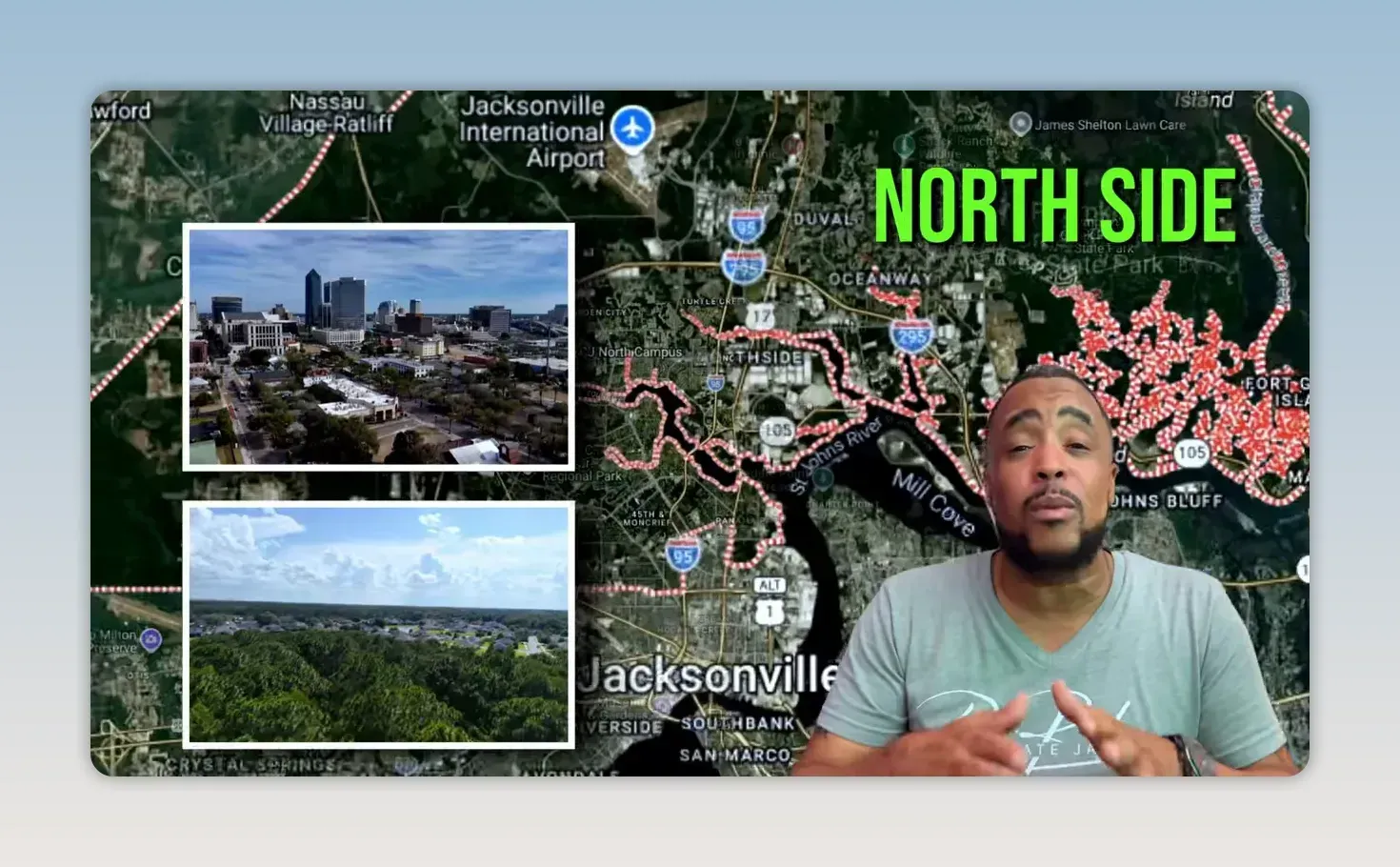
If your picture of Jacksonville's Northside comes from 20 years ago, it is time to update that image. The New Northside is quietly becoming one of the largest growth stories in Northeast Florida.
There is substantial residential development, a new VA facility, River City Marketplace, proximity to the airport, logistics and industrial growth connected to JAXPORT, and expanding healthcare employment. Communities including Kings Preserve, Tidewater, and other new developments are bringing thousands of homes to the area.
The Northside is also one of the places where buyers can still find newer homes at price points that may be tougher to find elsewhere in Northeast Florida.
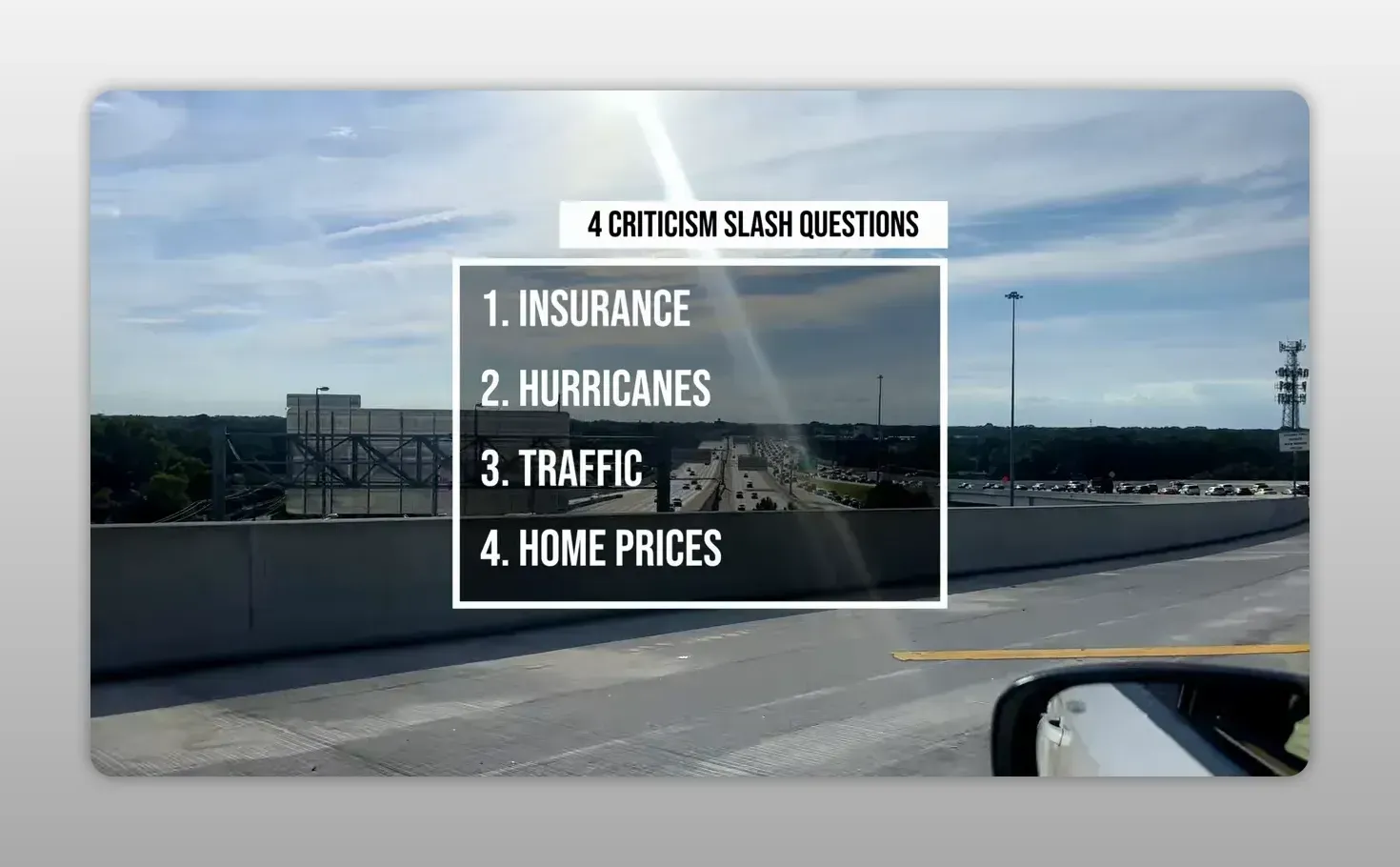
The Four Big Concerns: Insurance, Hurricanes, Traffic, and Home Prices
Growth always comes with criticism, and the concerns people raise are fair. The four questions I hear constantly are about insurance, hurricanes, traffic, and affordability.
Insurance costs
Insurance has become a real consideration in Florida. Premiums have increased, carriers have left the state, and the age of the home, its location, roof condition, and construction all affect the monthly payment.
But Florida is not one giant insurance zone. A newer home built to current building codes, with an updated roof and wind mitigation features, can insure very differently from a 40-year-old home with an older roof. That is a major reason many buyers are looking closely at new construction. Some newer homes are coming in with premiums below $100 a month.
The lesson is not to assume every Florida home carries the same insurance risk or cost. Evaluate the specific home.
Hurricanes
Hurricanes are a valid concern, especially for someone relocating from the Northeast, Midwest, or West Coast. National news coverage usually focuses on Florida when something serious has happened, but day-to-day life in Northeast Florida is not spent constantly thinking about hurricanes.
People prepare, pay attention during hurricane season, follow the news, and live their lives. Just like people in California prepare for earthquakes or people in the Midwest prepare for tornadoes, hurricane readiness is part of living in Florida.
Northeast Florida commonly deals with tropical storms, and while no weather risk should be ignored, the daily quality of life is still worth the trade-off for many families.
Traffic
Yes, traffic has increased. More people means more cars. That is just how that math works.
But traffic is also about perspective. Someone coming from Los Angeles may find Jacksonville traffic adorable. Someone coming from a smaller Midwest market may find it unbelievable. Compared with many major metro areas, most relocating families still find Jacksonville manageable, even though key corridors are busier than they used to be.
Home prices
Homes are more expensive than they were five years ago. A rapid drop in rates, intense buyer demand, corporate purchases, and cash offers well above asking price changed the market quickly.
Longtime locals understandably feel the price increase sharply. Many newcomers, though, still see Northeast Florida as value compared with the places they are leaving. That is the theme behind all four of these concerns: perspective.
Insurance is higher. Traffic is heavier. Home prices have increased. Hurricanes are a reality. None of that should be dismissed. But people are still moving here because they are comparing Jacksonville with where they live right now, not with Jacksonville 20 years ago.
What Jacksonville's Investments Say About the Future
One of the best clues about where a city is going is where people are investing money. And across Jacksonville and Northeast Florida, billions of dollars are being invested in the region's future.
Downtown Jacksonville and the riverfront
Downtown Jacksonville is going through one of its largest transformations in decades. Development includes the Four Seasons Hotel and Residences on the riverfront, new residential projects, restaurants, public spaces, and entertainment development designed to reconnect people with the St. Johns River.
The stadium district is also being redeveloped into more than stadium upgrades. The plan includes an expanded entertainment district with hotels, restaurants, mixed-use development, and public gathering spaces designed to shape the area for decades.

Education, healthcare, and JAXPORT
The University of Florida graduate campus being developed downtown is another important piece of the puzzle. It is about attracting talent, supporting workforce development, and creating long-term economic opportunity.
Healthcare remains one of the region's strongest economic drivers. Mayo Clinic continues expanding its Jacksonville campus, while Baptist Health and UF Health are also growing. These are major investments that can create jobs, attract talent, and strengthen the regional economy.
Then there is JAXPORT. The port continues to invest hundreds of millions of dollars in infrastructure and expansion, supporting more cargo, logistics, distribution, and jobs. Jacksonville's East Coast location makes it a serious player in the region's future growth.
Does that mean Jacksonville is perfect? Absolutely not. Every growing city has growing pains, including infrastructure demands, affordability concerns, traffic, and the challenge of managing development well. But cities in decline do not invest billions in the future. They do not build new campuses or attract major healthcare projects.
The future of Jacksonville is being built right now.
Get Jacksonville Right the First Time
Book a relocation consultation to match your budget, lifestyle, schools, builders, and ideal Northeast Florida community.
So, Should You Move to Jacksonville, Florida?
The right answer depends on what you need. There is no one-size-fits-all Jacksonville experience. A beach-focused lifestyle, a master-planned community, downtown access, a larger lot, school priorities, commute needs, new construction, or a specific price range can all point you toward a different area.
Do not make this decision based on headlines alone. Look at the actual trade-offs, compare communities, understand your insurance and commute picture, and decide what version of Northeast Florida fits how you live.
Jacksonville has changed, no question. But growth has not disappeared. The market has become more balanced, development is still moving, employers are still investing, and families are still choosing Northeast Florida because they see opportunity, space, lifestyle, and value.
Choose the community that fits your family, not just the city name on the map. Be Great, and Choose Excellence in everything you do.
Dr. Real Estate Jax Team
Whether you’re buying your first home or relocating to a luxury estate, I provide a personalized, stress-free experience that’s designed around your needs.

Recent Posts