Prefer to watch? The full video is on our YouTube channel: Florida Amendment 3 Passed: Who Actually Saves in Jacksonville. The written version is below.
Florida voters approved Amendment 3 on November 3, 2026, and the headlines were simple: homeowners get a bigger property tax break. Congratulations. Somebody finally decided to give us a little breathing room.
But if you are moving to Jacksonville from out of state, or you are trying to figure out what your tax bill will really be on a house you have not bought yet, the headline leaves out the parts that matter. Who actually saves? Who has to wait? And who makes up the difference when the city collects less?
The short answer: Amendment 3 raises the homestead exemption on non-school property taxes to $150,000 in 2027 and $250,000 in 2028. The Duval County Property Appraiser's example estimates about $2,674 a year in savings for a typical homesteaded home by 2028. It does not eliminate property taxes, and if you were not a Florida resident by December 31, 2026, the bigger exemption generally does not apply until your 5th year of homestead.
Does Amendment 3 eliminate property taxes in Florida?
No. So please don't call your mortgage company tomorrow and ask them to cancel your escrow account.
Amendment 3 expands the homestead exemption, which is a tax benefit for your primary residence. It lowers the assessed value that certain taxes are charged on. It does not lower what your house is worth on the market, and nobody is mailing you a $250,000 check.
- 2027:
the exemption on non-school property taxes rises to $150,000.
- 2028:
it rises to $250,000.
- 2029 on:
inflation adjustments begin.
- What stays:
school taxes and certain assessments.
The benefit is not the same for everybody. Your assessed value, whether your home qualifies for homestead, and when you became a Florida resident can all change the result.
How much will Jacksonville homeowners save under Amendment 3?
For a typical homesteaded home in Duval County, assessed at about $290,000, the Duval County Property Appraiser's example estimates about $1,632 in savings in 2027 and about $2,674 in 2028. That is roughly $223 a month once the full benefit is in place.
That is real money: insurance, repairs, groceries. With Publix prices, maybe 3 bags and a rotisserie chicken. But it is an example, not a promise for every homeowner.
Here is why. Market value and assessed value are not the same thing. If you have owned your home for years, Florida's Save Our Homes protection has likely kept your assessment well below what the house would sell for today. So when someone says Zillow puts their house at $600,000, that number tells you nothing about what their taxes should be.
For homes with a low enough assessed value, the expanded exemption could wipe out the non-school taxable value entirely. School taxes and some other charges still remain. That is meaningful relief, especially for retirees and longtime owners.
Moving to Florida after December 31, 2026: who waits 5 years?
This is the part with a clock on it. Under the amendment's residency provisions, if you were not a Florida resident by December 31, 2026, the expanded exemption generally does not kick in until your 5th year of homestead.
In the video we use Bob as the example. Bob has lived in Jacksonville for 15 years, homesteaded his house, built up years of assessment protection, and qualifies for the expanded benefit. Bob's cousin moves down from New Jersey in 2027, tired of the snow and the tax bill, and buys a similar house down the street. Those are Bob's tax benefits. They are not automatically his cousin's.
The cousin may still qualify for the existing standard homestead exemption. How residency is determined matters, so confirm your own eligibility with the property appraiser or a qualified tax professional.
Plan Your Jacksonville Move Around Your Lifestyle
Get help matching the right neighborhood, budget, commute and social lifestyle before you make a move.
Schedule a Consultation
Why the seller's tax bill is not your tax bill
This is the mistake we see buyers make all the time. They pull up a listing, see what the current owner pays in property taxes, and assume they will pay the same. They won't. That number reflects the seller's assessment history and exemptions, and when a home changes hands the assessed value can reset.
New construction works the same way. A builder's current tax bill on vacant land is not your future bill once the house is finished. We walked through more of those hidden costs in what new construction in Jacksonville really costs.
Picture moving into a $500,000 house, buying the furniture, and then finding out the monthly payment is higher than you budgeted. That is why we walk relocation buyers through the full cost of owning a home, not just the listing photos.
Does Amendment 3 help rental property owners?
Yes, but not through the big homestead exemption. A rental is not your primary residence just because you own it.
What the amendment does for certain non-homestead properties is lower the annual cap on assessed value increases from 10% to 5%. That caps the assessed value. It is not a guarantee that the final tax bill can only rise 5%.
And before anyone texts their landlord asking for a rent cut: rent still depends on supply, demand, insurance, maintenance and financing. You can ask. Just don't tell them Doc promised it.
Will Amendment 3 raise home prices in Jacksonville?
It could put some pressure on prices, but nothing here is a forecast. Here is the math we used in the video. If an eligible buyer saves $2,000 a year, that is about $167 a month. At a hypothetical 6.5% mortgage rate over 30 years, $167 a month is roughly the principal and interest payment on another $26,000 borrowed.
That does not mean every buyer qualifies for more, and it does not mean prices jump $26,000. It means lower carrying costs can change what buyers are willing or able to pay.
There is a second effect. Longtime owners with a low mortgage rate and a bigger tax break may simply stay put. That kitchen you have complained about for 5 years suddenly looks fine with some paint and a weekend at Home Depot. If fewer owners sell while buyer demand grows, resale inventory could tighten.
None of that is guaranteed. Builders can add supply, and mortgage rates and insurance costs still matter. What we will be watching: buyer demand, how many homes are available, and whether longtime owners become even less willing to sell.
How will Jacksonville make up $1.5 billion?
That is the open question. The projection discussed by the city is more than $1.5 billion less in property tax revenue over 5 years: roughly $200 million less in the first year and close to $300 million a year once the larger exemption is in place. Statewide projections put the 5-year drop in local property tax collections at roughly $46 billion.
That money does not vanish from Florida's economy. Much of it stays with homeowners, who can save it, spend it, pay down debt, or finally fix the air conditioner that has been making a noise since Easter. But the city still has roads to maintain, firefighters to equip and infrastructure to build.
Saying "cut waste" is different from naming exactly what gets cut. If the city collects hundreds of millions less, the options are some mix of these:
- Delay projects
- Reduce services
- Raise certain fees
- Adjust tax rates where the law allows
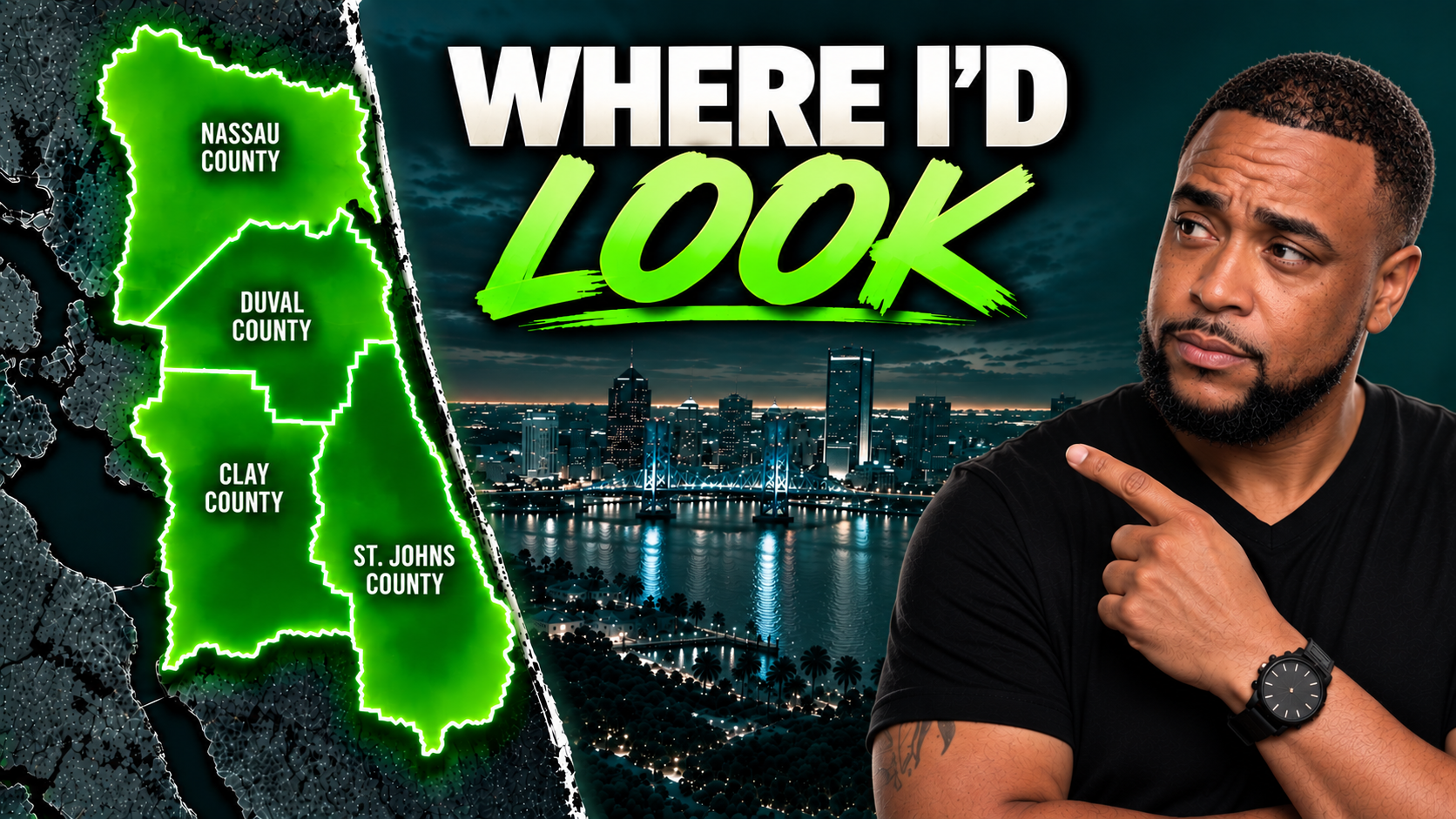
Growth makes this harder. Southern Duval, the Northside, Clay County, northern St. Johns and Nassau County do not share 1 budget, but they are all part of the same Northeast Florida growth story, and more homes mean more demand for roads and public safety. We mapped where that growth is heading in Where Is Jacksonville Growing?
Can the property appraiser just raise everyone's assessment?
No. Property appraisers have to follow Florida law. For homesteaded property, Save Our Homes generally limits annual increases in assessed value to 3% or the rate of inflation, whichever is lower. Assessments can change under the rules, especially after a sale, but the city cannot simply declare every longtime owner assessed at full market value.
Keep the 3 numbers straight: market value, assessed value and taxable value are different things. Mixing them up is how people end up with unrealistic expectations about their tax bill.
Our take
For a lot of established Florida homeowners, this is a meaningful financial benefit, and we are glad people may keep more of what they earned.
If a client called us about it today, here is what we would say. If you already own and homestead here, check your own assessed value with the property appraiser instead of trusting a headline number. If you are moving here, find out where you stand on the December 31, 2026 residency date, budget from your own projected tax bill rather than the seller's, and talk to a tax professional before you plan around the bigger exemption.
And keep watching what happens next. When you buy a home you are buying into the roads, emergency response and services around it, and how local governments handle this gap will shape those over time. That question did not end on election night. That is when the real work started.
New to the area? Start with what to know before moving to Jacksonville.
Sources: Florida Amendment 3, approved by voters November 3, 2026 (exemption amounts, residency provision and 5% non-homestead cap). Savings example: Duval County Property Appraiser. Revenue projections: City of Jacksonville, as discussed by the city, and statewide estimates, as cited in our video published November 14, 2026. Mortgage example is principal and interest only at a hypothetical 6.5%, 30-year fixed. This is not tax advice. This is education, not a forecast.
If you're thinking about relocating to Jacksonville or anywhere in Northeast Florida, or you're ready to buy or sell a home, we'd love the opportunity to help.
Our team specializes in making the entire process as smooth and stress-free as possible, whether you're moving from across the country or just across town.
Give us a call, send us a text, or schedule a Zoom consultation, and let's create a game plan that's built around your goals.
Schedule a Meeting
Call or text 904-414-2274
or email info@drrealestatejax.com